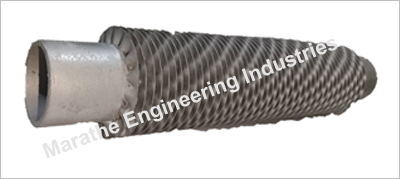
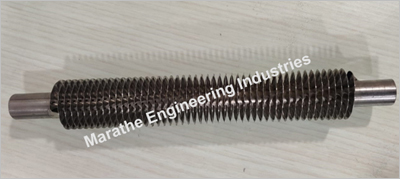
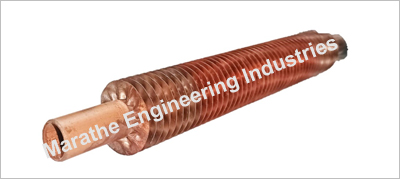
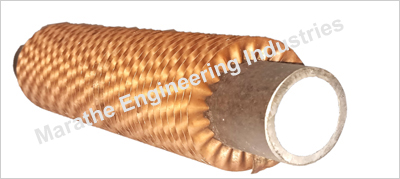
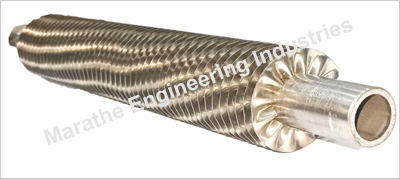
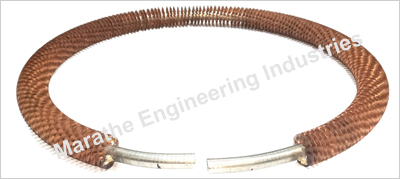
Fin Tubes

Home > Our Products > Fin Tubes

Fin Tubes are used for various purposes, and play a crucial role:

  1. Heat transfer enhancement: Fins increase the surface are, allowing for better heat transfer between fluids and gases.
  2. Efficiency improvement: It boost the performance of heat exchangers/ heat transfer equipments.
  3. Space-saving design: It enable more compact equipment designs. Where space is limited.
  4. Cost-effectiveness: It reduce material costs while maintaining performance.
  5. Versatility: Fin Tubes suit various applications, such as refrigeration, air conditioning, and xpower generation.
  6. Corrosion resistance: Fin Tubes can be made from corrosion-resistant materials, extending equipment lifespan.
  7. Easy cleaning: Fin Tubes smooth surface facilitates cleaning and maintenance.

The surface area of Fin Tubes can be calculated using various formulas, depending on the type of fin and tube configuration. Some common formulas include:

  1. Total surface area (A): A = π x (D_o x L + N x H x W)
  • D_o = outer diameter of the tube
  • L = length of the tube
  • N = number of fins
  • H = height of the fins
  • W = width of the fins
  1. Fin surface area (A_f): A_f = N x H x W
  2. Tube surface area (A_t): A_t = π x D_o x L
  1. Nanostructured surfaces: Enhanced heat transfer through nano-scale surface features.
  2. Heat transfer fluids with nanoparticles: Enhanced thermal conductivity and heat transfer.
  3. Active heat transfer technologies: Electrically or thermally actuated systems for enhanced heat transfer.
  4. Additive manufacturing: Rapid prototyping and production of complex Fin Tube geometries.
  1. Computational fluid dynamics (CFD) simulations for optimized Fin Tube design.
  2. Experimental investigations of novel Fin Tube geometries and materials.
  3. Development of advanced manufacturing techniques for complex Fin Tube structures.
  4. Investigation of hybrid Fin Tube design combining different materials and geometries.
  5. Exploration of new applications for Fin Tubes in emerging industries.

These advanced designs and emerging technologies aim to further enhance the efficiency, performance, and cost-effectiveness of Fin Tubes in various heat transfer applications
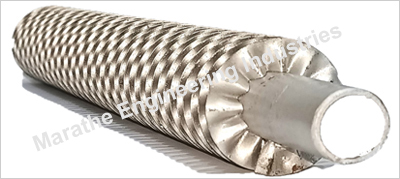
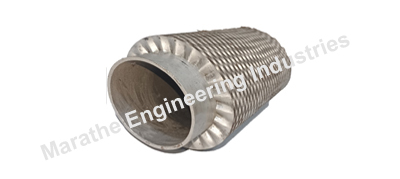
Troubleshooting Common Issues:

  1. Reduced heat transfer:
    • Fouling or scaling
    • Corrosion or damage
    • Inadequate flow rates
    • Incorrect Fin Tube selection
  2. Pressure drops issues:
    • High flow rates
    • Incorrect Fin Tube size
    • Blockages or restrictions
    • Corrosion or damage
  3. Vibration or noise:
    • Incorrect installation
    • Insufficient support
    • Flow-induced vibration
    • Loose connections
  4. Leaks or blockages:
    • Damaged or corroded tubes
    • Incorrect connections
    • Debris or contamination
    • Freeze-thaw damage

Optimising Fin Tube Performance:

Best Practices:

  1. Regular cleaning and maintenance
  2. Flow rate optimization
  3. Temperature control
  4. Pressure monitoring
  5. Fin Tube material selection
  6. Fin density and height optimisation
  7. Tube diameter and length optimisation

Get In Touch With Us!

Contact Us

MARATHE ENGINEERING INDUSTRIES

Powered by Marathe Fin Tubes | Designed and Developed by Rujal Media Pvt Ltd